Finding dependable HVAC Tacoma services near me requires technicians who understand how coastal Pacific Northwest moisture impacts heating efficiency and heat pump defrost cycles. Our technicians diagnose airflow restrictions, furnace mechanical failures, and refrigeration issues across older Craftsman residences and newer South Sound builds without aggressive sales pressure.
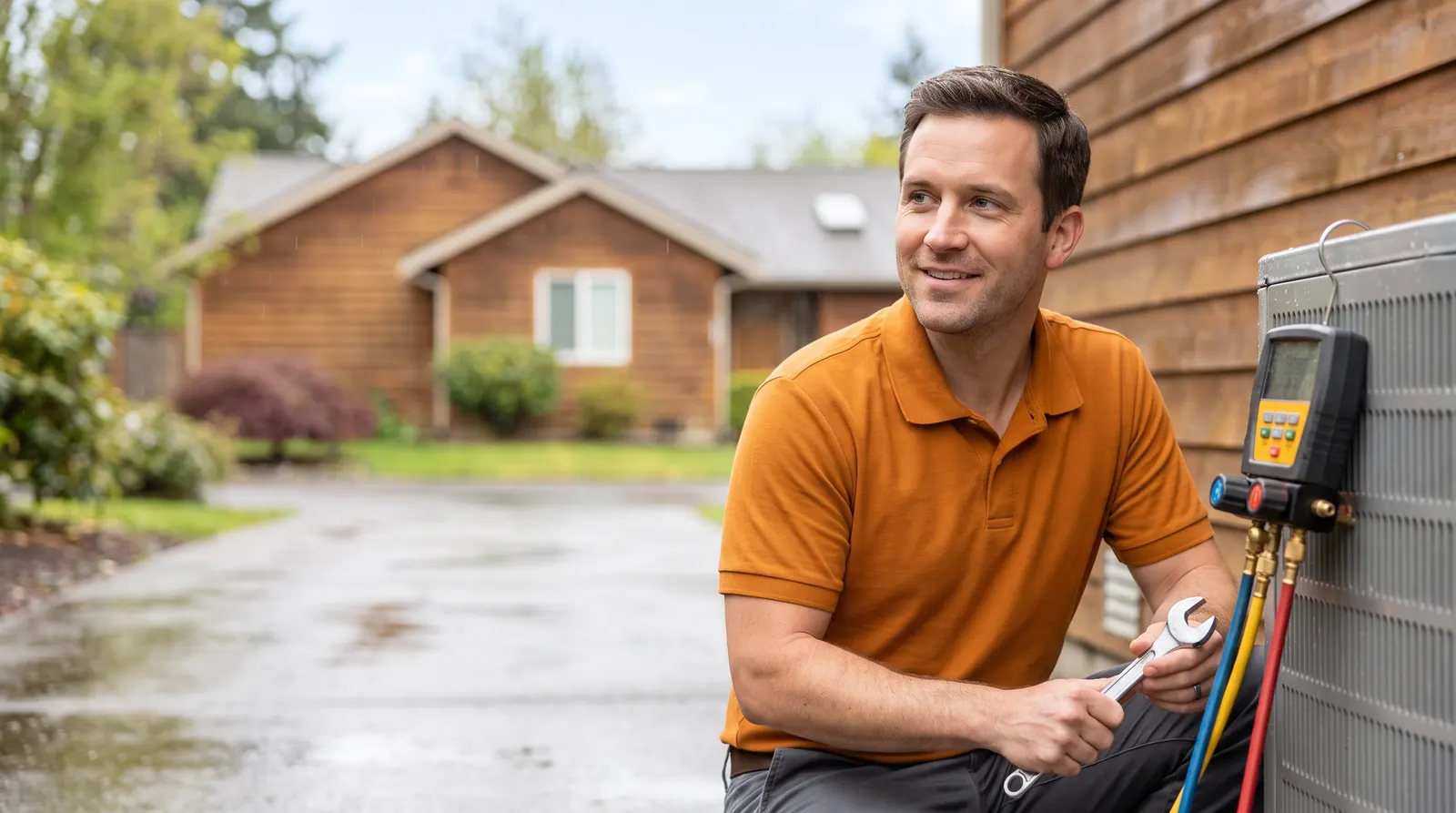
An HVAC company in Tacoma is a licensed mechanical contractor that installs, repairs, and maintains residential heating, ventilation, and air conditioning systems across Pierce County properties.
Every service reflects the same meticulous attention to detail — whether it's a single job or a larger hvac project across Tacoma.
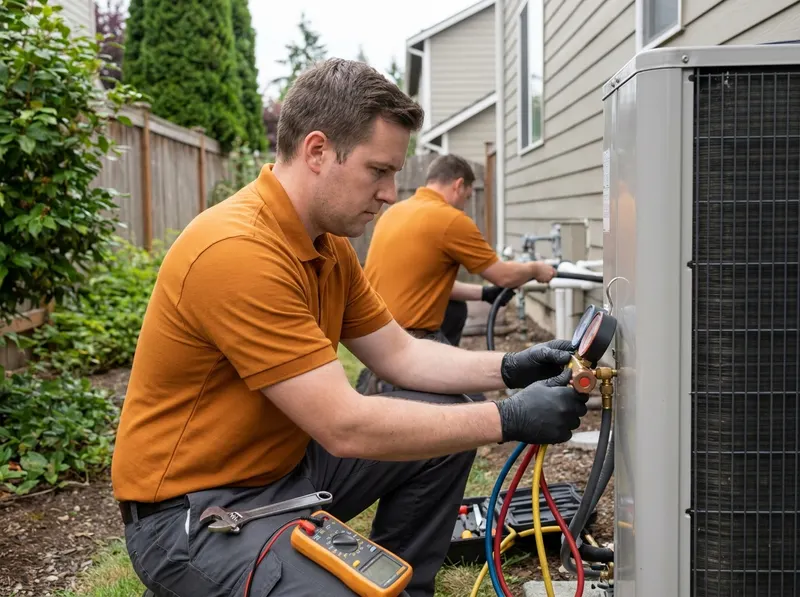
Cold-climate inverter heat pump installations tailored specifically for Western Washington marine climate profiles. Our electrification retrofits replace inefficient baseboard heaters, aging oil tanks, or legacy gas furnaces with high-performance variable-speed systems capable of maintaining full heating capacity down to sub-freezing temperatures without relying on high-draw resistance heat strips. Every installation begins with a rigorous room-by-room Manual J load calculation to establish the exact heating and cooling loss of your building envelope, taking into account ceiling heights, window glazing, insulation R-values, and local wind exposure along Puget Sound. We verify electrical service panel capacity, sizing sub-panels or line sets appropriately, and install heavy-duty composite equipment pads with integrated snow-and-ice risers to ensure proper drainage during damp winter defrost cycles. Inverter technology continuously adjusts compressor speed between 20 percent and 100 percent capacity, eliminating the wasteful electrical spikes of single-stage systems and maintaining stable indoor temperatures across shifting Pierce County shoulder seasons.
View details →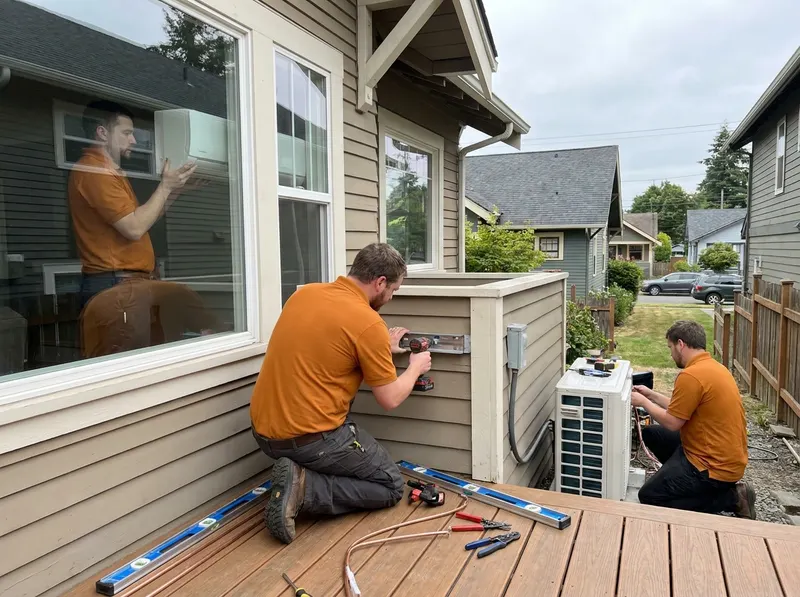
Targeted single-zone and multi-zone ductless heat pump system installations designed for historic Craftsman homes, multi-story residences, accessory dwelling units (ADUs), and daylight basements where running bulk ductwork is structurally impractical or cost-prohibitive. Each indoor wall-mounted, floor-mounted, or ceiling-cassette head operates independently via dedicated electronic expansion valves and onboard thermistors, allowing occupants to heat or cool individual living zones to specific comfort levels without conditioning unoccupied spaces. Refrigerant lines, electrical communication wiring, and condensate drainage tubing are housed within UV-resistant, color-matched architectural line-hide covers on the home exterior, preserving exterior curb appeal in historic neighborhoods like Old Town and the Stadium District. Modern ductless mini-splits offer ultra-quiet operation with sound ratings as low as 19 decibels, advanced washable multi-stage filtration that captures maritime moisture spores and seasonal pollen, and high seasonal energy efficiency ratios that qualify for maximum local utility rebates through Tacoma Power.
View details →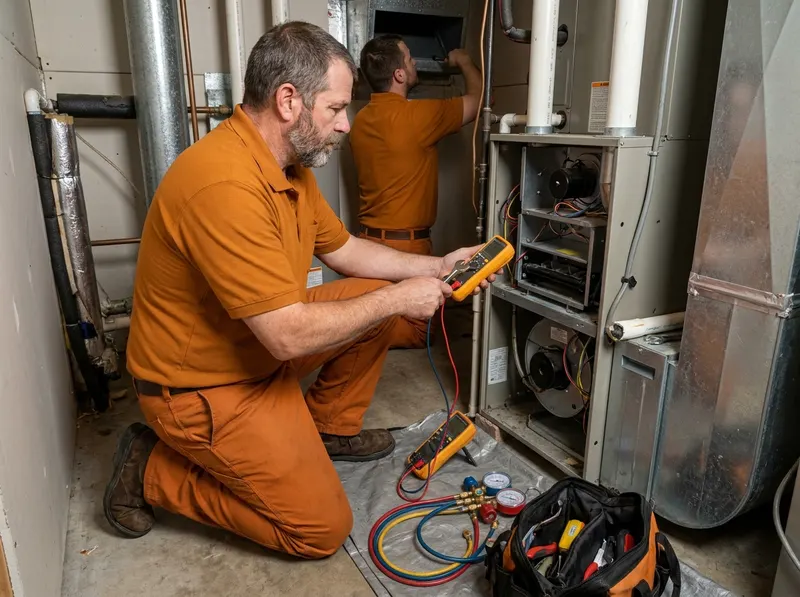
Systematic mechanical diagnostic and repair services for natural gas, propane, and electric forced-air furnace systems across Tacoma. When a furnace locks out on safety error codes during a freeze, our technicians perform methodical component triage rather than resorting to high-pressure replacement tactics. Diagnostic procedures include static pressure testing across the supply and return plenums, testing flame rectification sensors in microamps, checking high-limit switches for thermal degradation, analyzing blower motor capacitor microfarad ratings, inspecting induced-draft blowers for bearing wear, and verifying gas valve manifold pressures against manufacturer specifications. We utilize high-resolution digital combustion analyzers to test flue gas composition, oxygen levels, and carbon monoxide presence, ensuring that older heat exchangers are completely free of hairline stress fractures or internal corrosion before recommending any repair pathway. All mechanical replacements use OEM or heavy-duty commercial-grade universal components to guarantee operating reliability.
View details →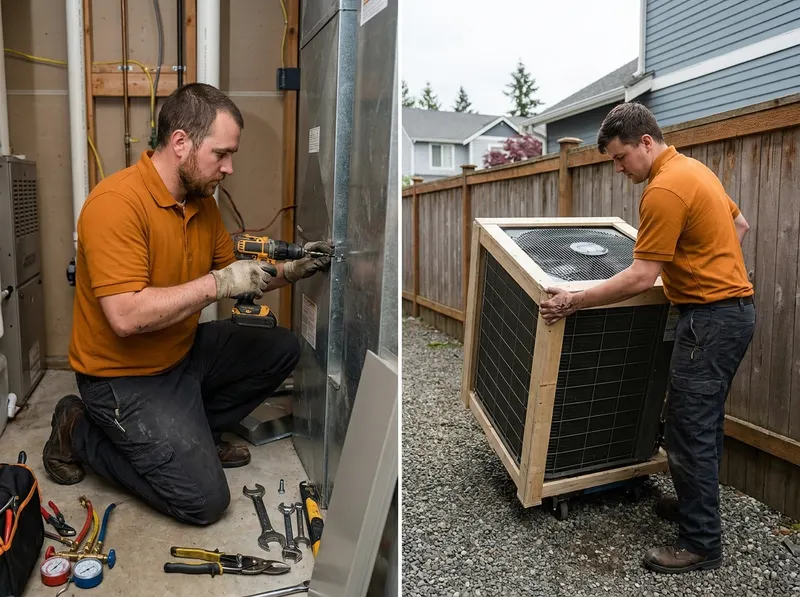
Complete replacement of obsolete central air conditioning condensers and legacy furnaces with modern, fully communicating centrally ducted heat pump systems. We evaluate your home's existing plenum design and distribution trunks to eliminate the high static pressure bottlenecks that cause premature compressor failure and noisy airflow. If existing sheet metal or flex ducting is undersized, our technicians fabricate custom transition fittings, install aerodynamic supply drops, and expand return air grilles to guarantee proper CFM delivery across all rooms. Systems can be configured as all-electric setups paired with multi-stage variable-speed air handlers featuring supplemental staged backup heat kits, or as dual-fuel hybrid systems that combine an electric heat pump with a high-efficiency condensing gas furnace that automatically takes over during extreme sub-freezing conditions. Every centrally ducted replacement includes precise digital refrigerant charging via subcooling and superheat measurements, secondary drain pan flood protection switches, and modern smart thermostat integration.
View details →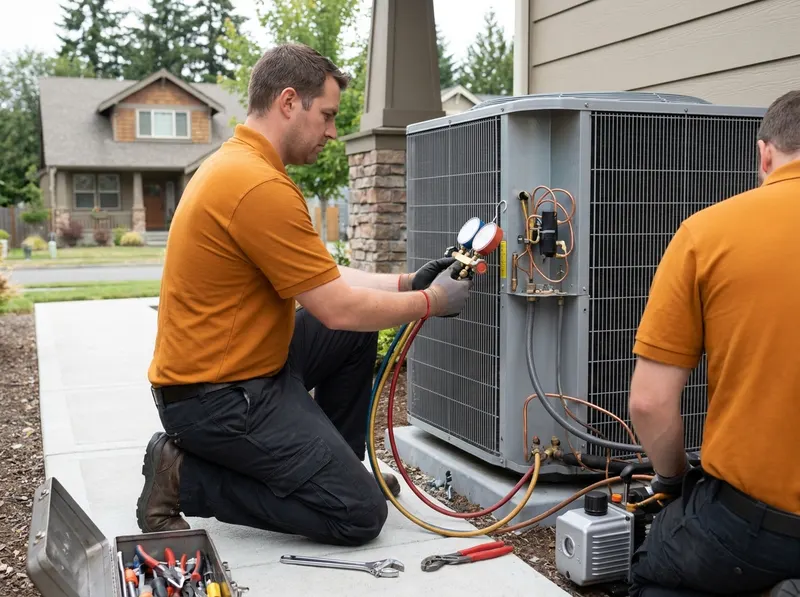
Dedicated central air conditioning installations, precision seasonal recharges, and compressor repairs engineered to handle South Sound summer heat spells. As summers in Western Washington continue to trend warmer, unconditioned homes suffer from stifling second-story heat gain and elevated indoor humidity. We install high-efficiency 14.3 to 18+ SEER2 central condensing units equipped with sound-dampening swept-wing fan blades, composite base pans, and high-efficiency scroll compressors that operate smoothly without causing electrical flicker. For existing AC systems suffering from inadequate cooling output, our technicians perform electronic leak detection using ultrasonic and heated-diode sensors, clean clogged outdoor aluminum fins with non-acidic foaming cleansers, unblock clogged condensate drain traps to prevent water overflow into living areas, and replace degraded dual-run capacitors and contactor relays before they cause catastrophic compressor lockouts.
View details →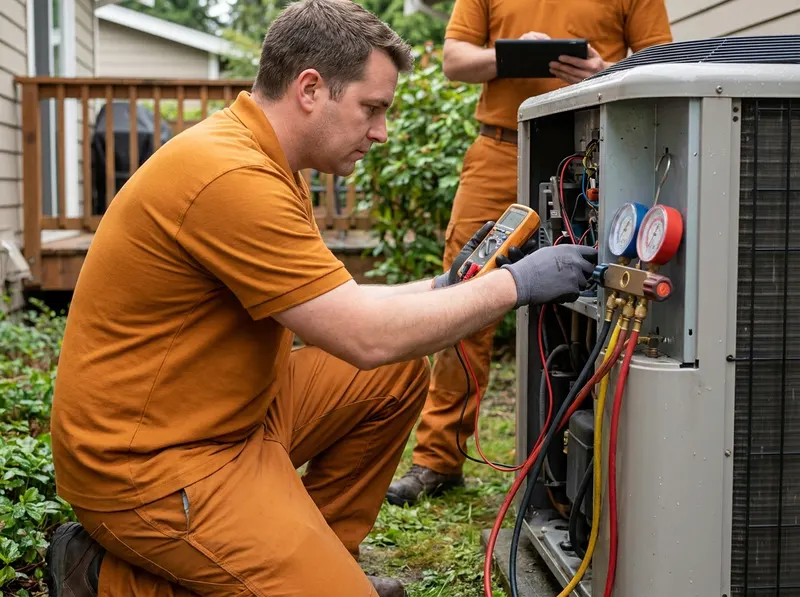
Priority emergency HVAC triage for complete mechanical breakdowns, ignition lockouts, frozen evaporator coils, and electrical control failures during extreme seasonal weather events. When freezing maritime air drops South Sound temperatures or sudden summer heat pushes indoor conditions to hazardous levels, our diagnostic protocol immediately focuses on rapid, accurate mechanical assessment. Technicians inspect high-voltage disconnect boxes, test low-voltage 24V control circuits, measure motor winding resistances against ground to identify short circuits, check reversing valve solenoids on heat pumps, and clear iced external heat pump coils caused by failed defrost control boards or faulty outdoor ambient temperature sensors. We carry extensive diagnostic inventory and universal critical replacement components on service vehicles to restore safe heating or cooling operation on the initial visit whenever technically feasible.
View details →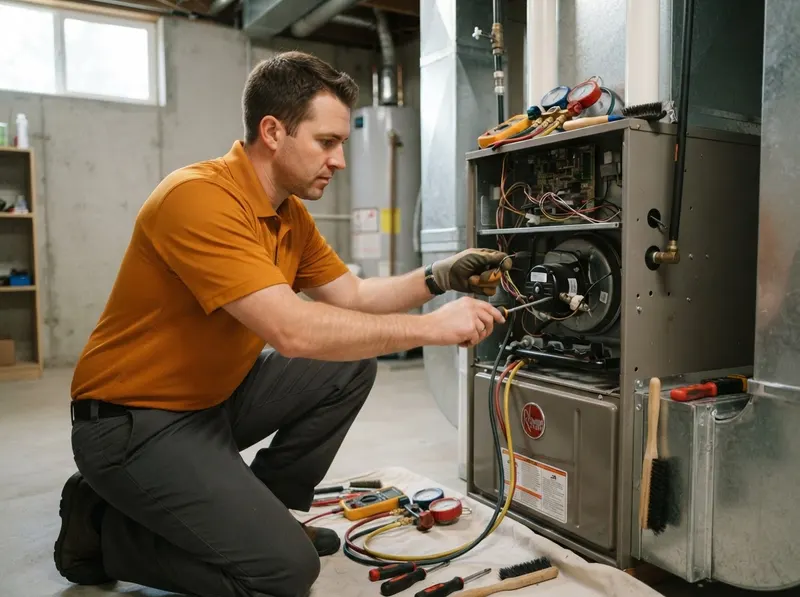
Comprehensive 28-point preventative maintenance and safety tune-up services designed to preserve mechanical reliability, reduce monthly electrical draw, and satisfy manufacturer warranty requirements. Preventative care in the damp Puget Sound environment requires specialized attention to moisture mitigation and corrosion control. Our seasonal tune-up includes chemical cleaning of indoor evaporator and outdoor condenser coils, clearing biological slime and algae from condensate drain lines and condensate pumps, tightening all high-voltage and low-voltage electrical terminations to prevent arc faults, testing defrost cycle initiation and termination parameters, calibrating digital thermostats, measuring system-wide static pressure across air filtration racks, and lubricating motor bearings where applicable. Regular maintenance prevents up to 95 percent of unexpected system breakdowns and ensures equipment maintains factory-rated efficiency throughout its working lifespan.
View details →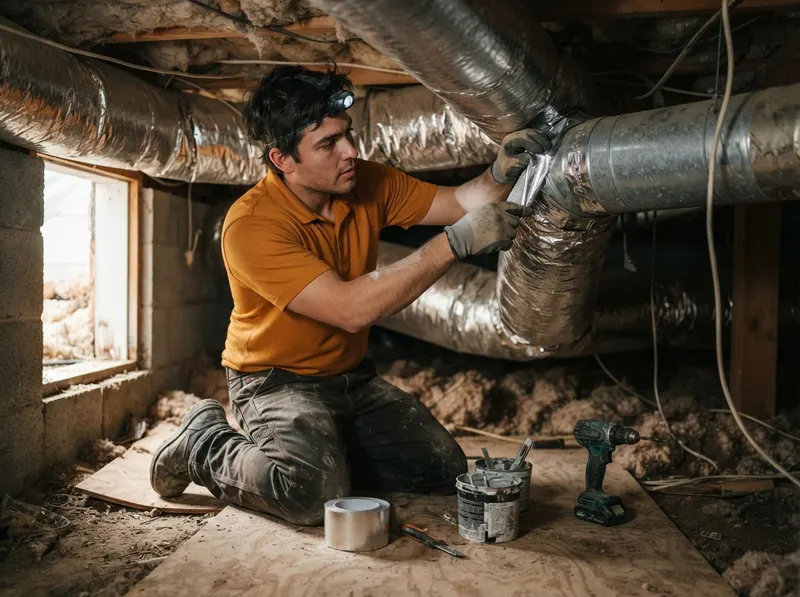
Precision duct assessment, aerodynamic airflow optimization, mechanical mastic sealing, and thermal insulation wrapping for residential crawlspaces, basements, and attics. Leaky, uninsulated ductwork in unconditioned crawlspaces can lose up to 30 percent of conditioned air to the outside while drawing damp, moldy ground air into your living spaces through negative pressure. We conduct visual duct inspections and static pressure testing to locate disconnected trunk lines, crushed flexible duct runs, and leaking boot connections. Technicians mechanically fasten all sheet metal joints with self-tapping screws, seal all seams with fiber-reinforced water-based mastic paste, and wrap supply and return runs with high-density R-8 foil-faced fiberglass insulation to eliminate convective heat loss and prevent summer sweating on duct surfaces that leads to structural moisture damage.
View details →An HVAC company in Tacoma is a licensed mechanical contractor that installs, repairs, and maintains residential heating, ventilation, and air conditioning systems across Pierce County properties.
You get a firm, itemized quote for your hvac before any work begins — no surprises, no pressure.
Careful prep, tidy work, and a full cleanup when we are done. We treat your home and belongings like our own.
The same trusted, background-checked team from the first call to the final check.
Selecting the right mechanical heating and cooling architecture for a Pierce County home requires balancing the building envelope, existing infrastructure, electrical service capacity, and long-term operating costs. If your home is an older architectural property in the North End, Proctor District, or Stadium District with original lath-and-plaster walls, uninsulated floor cavities, and no existing basement ductwork, choose a multi-zone ductless mini-split heat pump system. Ductless systems deliver targeted, room-by-room zoning with inverter-driven compressors that modulate output precisely to match heat loss without requiring disruptive structural demolition or the loss of interior closet space for sheet metal chases. If your home is a mid-century daylight basement, split-level, or contemporary build in West End, South Tacoma, or Fern Hill that already possesses an intact, properly sized sheet metal duct network, choose a centrally ducted variable-capacity heat pump paired with a high-efficiency electric air handler or a dual-fuel gas furnace. Central systems provide uniform whole-structure filtration, whole-home humidity management, and discreet register aesthetics while utilizing existing distribution pathways. If your property currently runs an aging gas furnace that is under twelve years old with an isolated component failure—such as a seized blower motor, cracked draft inducer housing, or faulty hot surface igniter—and the primary heat exchanger passes a rigorous visual and combustion-gas safety inspection, choose targeted mechanical component repair rather than an immediate full replacement. The primary trade-off across these choices is upfront capital allocation versus ongoing utility expenditure: component repairs carry the lowest initial cost ($300 to $1,800) but leave the home vulnerable to future secondary failures and unaddressed summer cooling needs; ducted central heat pump retrofits require moderate-to-high investment ($9,200 to $18,500+) and depend entirely on the aerodynamic integrity of existing concealed ducting; while multi-zone ductless heat pump electrification requires higher equipment and line-set investment ($8,500 to $17,500+) but delivers the highest seasonal energy efficiency rating (SEER2 up to 28+ and HSPF2 up to 12+), cuts winter heating electrical demand by up to 50 percent compared to baseboards, and provides independent room temperature control throughout shifting South Sound weather patterns.
Every project gets a firm, written price after a free on-site visit. Ranges below for orientation.
Tell us about your hvac job and we'll send a clear, written quote — usually the same day. Or just call and talk to a real Tacoma pro.
Tacoma's unique geographical setting along Commencement Bay and the Tacoma Narrows creates distinct microclimates characterized by persistent marine moisture, damp coastal wind patterns, and prolonged cool shoulder seasons where outdoor relative humidity frequently exceeds 85 percent. In neighborhoods like the historic North End, Old Town, and the Stadium District, early 20th-century Craftsman bungalows, Queen Anne Victorians, and Tudor revivals often feature thick lath-and-plaster wall assemblies, uninsulated wall cavities, and original gravity furnace duct runs that were retrofitted decades ago. These legacy configurations create extreme static pressure imbalances, hot upper floors during summer heat domes, and persistently cold, damp ground floors throughout the winter months. Furthermore, the combination of high atmospheric humidity and near-freezing winter temperatures in Pierce County places exceptional mechanical stress on heat pump defrost controls, demanding precise sensor calibration to prevent outdoor coils from encasing in solid ice blocks. In mid-century and post-war residential areas across South Tacoma, the Lincoln District, Fern Hill, and West End, many homes rely on dated 100-amp electrical panels and legacy baseboard heaters that drive winter electric bills through the roof. Modern electrification in these communities requires careful panel load calculations, strategic sub-panel planning, and knowledge of Tacoma Power (TPU) rebates and Puget Sound Energy (PSE) efficiency incentives. Our mechanical strategies are engineered specifically for South Sound homes—optimizing airflow across complex multi-story layouts, resolving crawlspace moisture infiltration, and installing cold-climate inverter systems calibrated to deliver consistent indoor comfort regardless of shifting Puget Sound weather fronts.
 Future Comfort HVAC Systems